
Finding Green Bay Residents
Begin with the fact you already hold. A street address points first to the Brown County Property Search, which links the site to a parcel, an owner, a municipality, and its taxing districts. A full name paired with a birth date fits MyVote Wisconsin. A party name can also surface in a deed index or a Wisconsin court case summary. Older names and addresses live elsewhere. City directories, newspapers, vital indexes, and probate collections at the Brown County Library and the UW-Green Bay Area Research Center cover the historical ground.
No source lists everyone at an address. Property data tracks ownership only. The voter lookup covers registered voters and leaves out protected electors. Court and deed indexes name just the parties to those files. Dates matter as much as names. The strongest Green Bay residents directory search compares two or more independent rolls and notes when each record was created, because a mismatch between them often reveals more than a match.
- Enter the address in the county property search and record the parcel, owner, and municipality.
- Check MyVote Wisconsin by name or address while respecting protected-record limits.
- Carry a confirmed owner name into the recorded-document index.
- For an older household, compare directories, census schedules, newspapers, and vital indexes.
- When an index stops, contact its custodian with a focused request.
Green Bay Directory Custodians
Brown County is the working hub for Green Bay resident records. The Register of Deeds holds recorded land documents and vital records. Property Listing, the Treasurer, and local assessors all feed the parcel and tax search. The County Clerk runs elections, while the Wisconsin Elections Commission supplies MyVote. Court files belong to the Clerk of Circuit Court. That distinction matters. It shows up once a search moves from an address to a deed or a case file.
Brown County Register of Deeds
305 E. Walnut St., Room 260
Green Bay, WI 54301
920-448-4470
Green Bay Assessor
100 N. Jefferson St.
Green Bay, WI 54301
920-448-3066
Green Bay Parcel Search
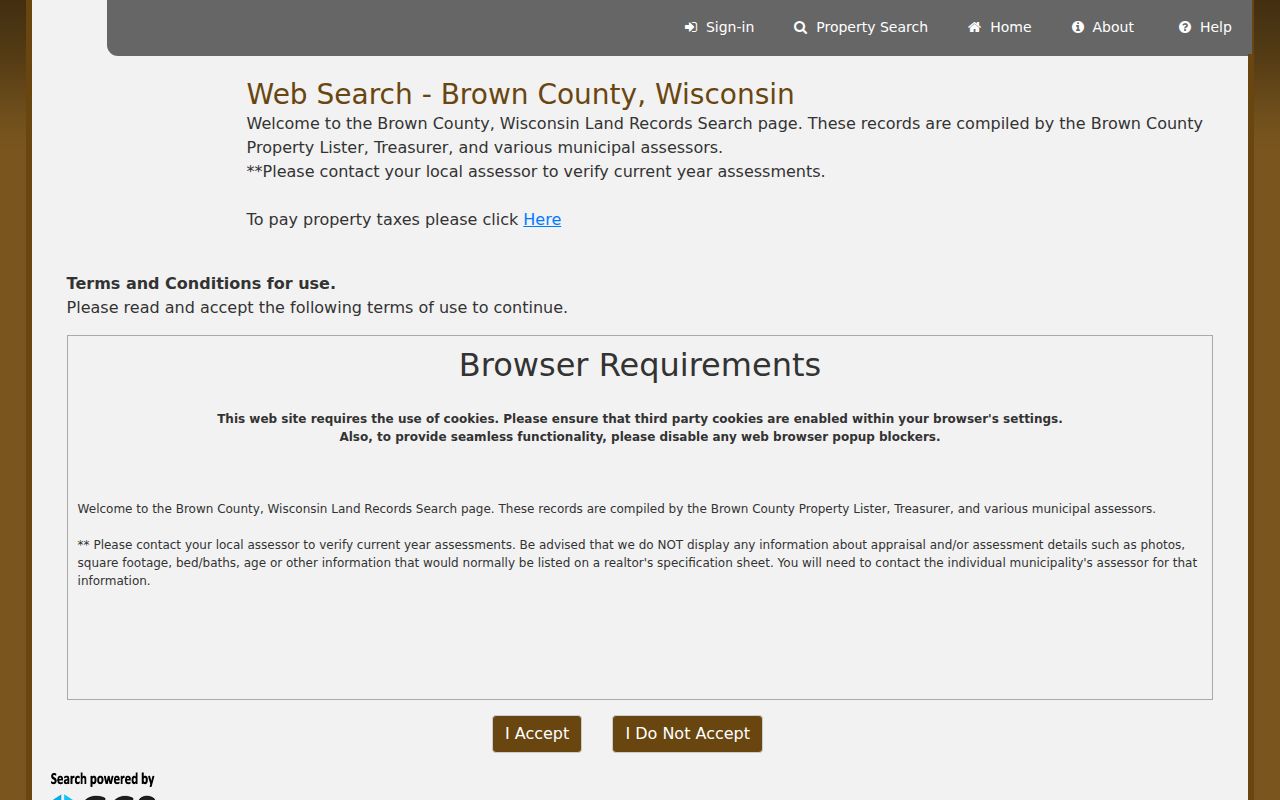
A Green Bay street address points to the county parcel portal first. Three offices feed it. The Property Lister, the Treasurer, and municipal assessors supply the data, and a result may show the owner, the municipality, school and sanitary districts, land class, acreage, assessed value, and tax fields. The public landing screen has no owner-name tab. The county advises confirming current-year assessments with the local assessor. The Brown County Land Records Search page shows the actual controls available before a query.
| Search control | Use in Green Bay | Format or limit |
|---|---|---|
| Parcel or alternate parcel | Find a known tax parcel | Use the county identifier |
| House number and street | Match a civic address | Direction and street type are separate |
| Plat, section, township, range | Find land without a modern address | Useful for older descriptions |
| Municipality | Keep the search inside Green Bay | Postal city and municipality can differ |
| Current or historical property | Follow parcels through change | Choose the relevant status |
The county landing screen handles both address and parcel work. Its fields show why a full street suffix and the correct municipality can change a result.
A match marks an ownership record, not every person inside the home. Check a second roll before concluding anyone lives there.
Green Bay Deed Index Cutoff
The Brown County Register of Deeds opens its document images and Grantor/Grantee Index on February 1, 1962. Everything flows through Laredo and Tapestry. Laredo serves frequent professional users, while Tapestry takes a pay-as-you-go approach for the occasional search. An in-office terminal search is free. Printing still costs money, and land-record research at the office now requires an advance appointment.
A grantor transfers an interest in land. A grantee receives it. Search both roles, since the same owner can sit on opposite sides of different documents. Known document numbers, book and page references, recording dates, document types, and parcel or legal descriptions all help. Each one narrows the index. Older deeds need different stops. The office tract index, the genealogy room, library maps, and the Area Research Center reach back before the online start date, which is not the start of county records.
Current Green Bay Resident Rolls
Modern rolls of Green Bay residents each serve a narrow public task. None aims at completeness. The property search names owners tied to parcels. MyVote checks registration from details the user supplies. The recorded-document index lists parties to deeds, mortgages, plats, and other filings, while city staff and neighborhood contacts form narrower rosters, and no roll deserves treatment as a master list.
| Source | Who appears | Keeper | Access |
|---|---|---|---|
| Property Search | Parcel owners | County and assessors | Free online |
| MyVote | Matching registered voters | Wisconsin elections system | Name or address check |
| Grantor/Grantee Index | Document parties | Register of Deeds | Paid web or free terminal |
| City staff directory | Municipal contacts | City of Green Bay | Free online |
Fit the roll to the question. Ownership starts with a parcel. Registration starts with MyVote, and a recorded transfer starts with the deed index. For same-name cases, the Green Bay resident lookup shows how to compare records without merging people.
MyVote Search in Green Bay
MyVote Wisconsin offers two search paths. The name route needs three things. It asks for a first name, last name, and birth date. The address route takes a street, city, ZIP, and an optional unit. Exact spelling matters. Use the name as it appears on a Wisconsin driver license or ID. A failed match proves nothing about where someone lives.
Wisconsin has no party registration. The official record can show a voter's name, residence address, and registration status. It also lists the municipality, ward, precinct, and districts. Birth dates, license numbers, Social Security numbers, and protected addresses remain restricted. Old records without a birth date may default to January 1, 1900. The official voter form shows why the matching details matter.
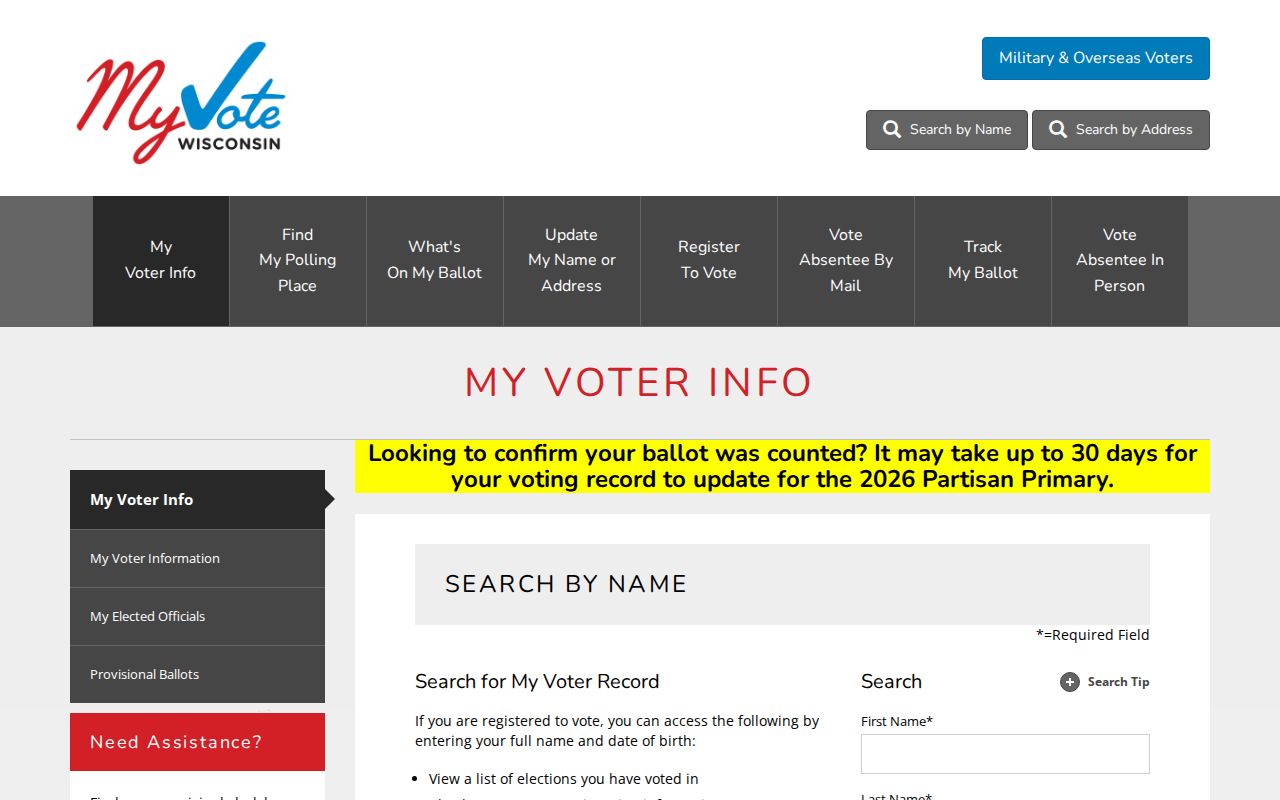
The form guards the broader voter file by demanding matching inputs, and confidential electors may never return a result.
Official Green Bay Rolls Compared
Official Green Bay records answer a narrow question well. A property roll or voter roll names its custodian, the event it records, and the route to the full file. Commercial people-finding reports work differently. They blend public records with other data, and that blend can go stale, merge two same-name residents into one profile, or repeat an error long after the records office fixes it.
| Route | Best use | Main limit |
|---|---|---|
| Official roll | Confirm one defined fact | Limited scope |
| Custodian copy | Verify the source document | Fees or eligibility may apply |
| Commercial compilation | Generate a personal research lead | Source date may be unclear |
Opting out of a commercial report changes nothing at the source. The government record survives. Corrections belong with the office that created the record in the first place.
Green Bay Directory Terms
Public portals lean on shorthand for very different levels of proof. A map pin, a search hit, and an old street directory line are not equals. Keeping the terms straight stops any one of them from carrying more weight than it deserves.
- Roll
- A list kept for one public purpose, such as tax assessment.
- Index
- A finding aid pointing to a document, not always the full file.
- Parcel
- A mapped tax unit whose shape is not a legal survey.
- Criss-cross directory
- A volume arranged by street and house number.
- Certified copy
- A copy authenticated by its custodian.
BrownDog shows the problem in one parcel. Its LegalLabel may cite the document that shaped the parcel, while a linked DocID points to a newer filing. The recorded deed still governs the legal chain.
Green Bay Court Name Checks
Wisconsin Circuit Court Access posts case summaries. These can help separate Green Bay residents who share a name. A hit lists the party, county, case number, type, filing date, status, events, and disposition. It is still just an index. Sealed, expunged, juvenile, and certain paternity records stay off the site.
The Brown County Clerk of Circuit Court keeps the files at 100 S. Jefferson Street. Lobby computers open the electronic records. Requests can come in person, by mail, phone, fax, or email. Online viewing reaches back to 1990, and older files may sit off-site. Copies run $1.25 per page. Certification adds $5 per document, and a search without a case number costs $5.
Green Bay municipal ordinance cases run through a separate public inquiry. Do not confuse them with circuit cases.
Green Bay Offline Record Routes
A gap online is rarely a dead end. The Register of Deeds offers an appointment-only search room, a public terminal, mail requests, copy service, and paid web access. The circuit clerk accepts several request methods as well. Brown County Library and the UW-Green Bay archives bridge older gaps with shelves, microfilm, maps, and original files.
Wisconsin Public Records Law, Wis. Stat. §§ 19.31-19.39, lets anyone request identifiable records from the responsible authority. Name the person, address, record type, and a helpful date range. Ask for the segregable public portions when part of a file is confidential. No fixed statewide deadline exists. The authority must respond as soon as practicable and without delay.
The County Clerk does not hold circuit files. The assessor does not certify deeds. Send each request to the right custodian.
Green Bay Vital Record Links
Birth, death, marriage, and divorce certificates can confirm family ties, former names, and event dates. They are not an open resident roll, though. The Brown County Register of Deeds issues eligible records at its Green Bay counter. Wisconsin also handles mail, web, and phone orders through the Department of Health Services. The state counter is closed, so skip any plan for a Madison walk-in.
Statewide issuance depends on the record type and date. Brown County lists statewide births from October 1, 1907, deaths from September 1, 2013, marriages from October 1, 1907, and divorces from January 1, 2016. Direct-and-tangible-interest rules govern certified copies under Wis. Stat. chapter 69. Older genealogy work takes a different path through in-person records, microfiche, the library, the Wisconsin Historical Society, and the Area Research Center.
Wisconsin vital-record applications sorts the forms by event. Read the current identification, eligibility, and delivery instructions first. An index entry only identifies a record. Only the custodian can issue the certified copy.
Historic Green Bay Residents Directory
Brown County Library holds Green Bay and Brown County directories. Some reach back to the 1870s. Its Local History and Genealogy collection spans more than 10,000 print volumes. It also holds 4,400 microfilm reels. The exact years and publisher runs are not listed online. Ask staff or search the catalog before assuming every year survives.
A city directory entry may list a name. It may also show a spouse or widow notation, occupation, employer, address, and a business listing. Reverse sections start from the street instead. The Green Bay city directory guide shows how to pair entries with census years. It also pairs them with newspapers. Cemetery cards, historic vital indexes, plats, and Sanborn maps add context around each household.
The library collection page connects to staff help and the historical shelf.
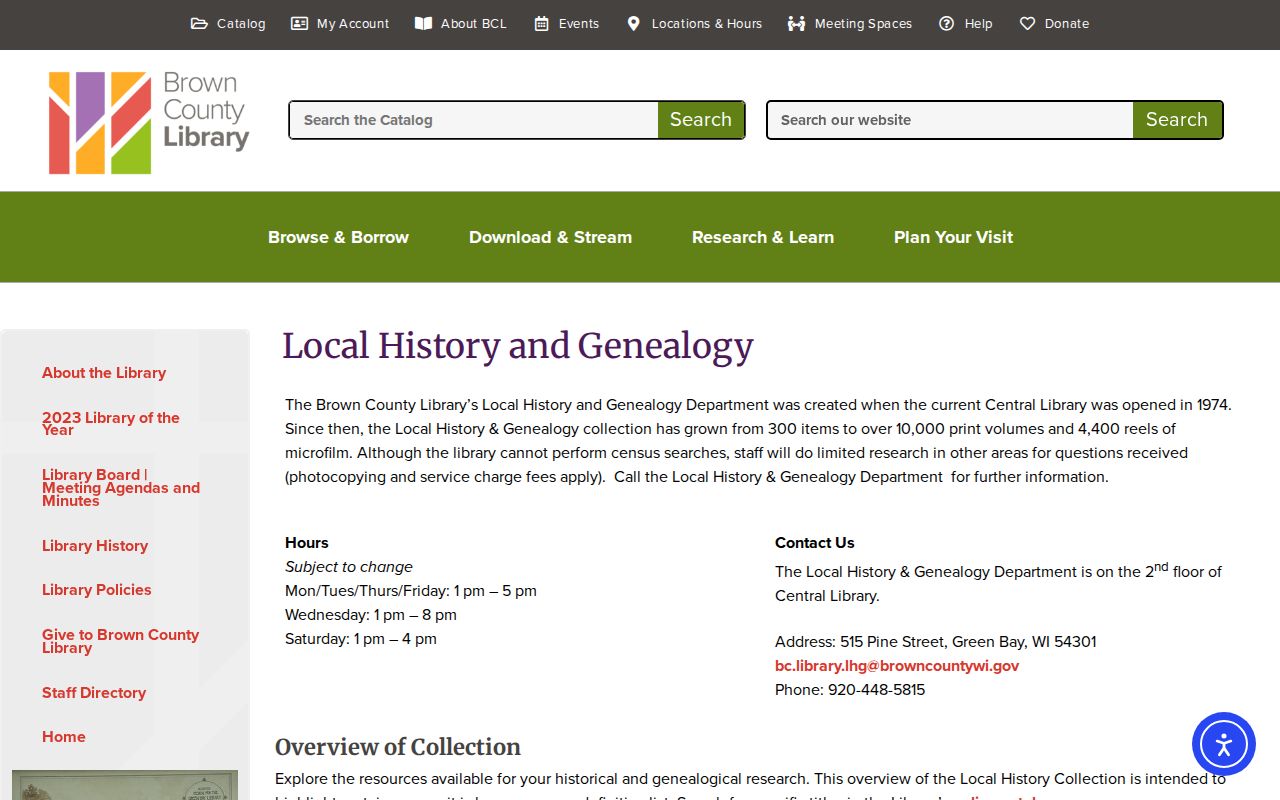
This collection reaches past the modern online cutoff and helps separate past residents of Green Bay from current owners.
Green Bay Family Search Paths
A Green Bay family search often starts with a relationship, not a street address. Brown County probate files list heirs, personal representatives, and anyone else tied to an estate. WCCA can hand you a case number. Older probate material is a different story. The Register in Probate, the local file, or the UW-Green Bay Area Research Center is usually the better stop. The ARC partial index covers Brown County wills and probate case files. Dates run from 1821 through 1976. It also reaches citizenship records from 1829 through 1984.
The UW-Green Bay Archives search is flexible. You can query by first and last name, county, collection, Soundex, keywords, and case type. Corporate name and role type work too. Results describe records rather than show full images. Copies cost $10 for retrieval plus up to 20 pages. Extra pages run $0.50 each. The stated wait is six to eight weeks. Write down the collection and result details before you request anything.
Other family paths have official routes of their own. An adult adoptee may use Wisconsin's Adoption Records Search Program for eligible information. It can include a birth-parent contact search under program rules. An heir can pair probate with deeds and Wisconsin unclaimed property. Old classmates might surface in Brown County Library yearbooks, school annuals, and newspapers. Treat each trail separately, because a shared surname alone proves no family link.
The library's long newspaper run can settle moves, marriages, deaths, and estate notices. Green Bay Gazette variants reach back to 1870. The Press-Gazette begins in 1915, and Brown County community newspaper microfilm goes to 1833. Subject card files cover only defined periods. They are not vital-record indexes.
Green Bay Records Changed Places
Records in Green Bay have moved more than once. Brown County dates to 1818. Green Bay incorporated as a city in 1854, the same year voters shifted the county seat from De Pere. Fort Howard joined Green Bay in 1895, and Preble consolidated with the city in 1964. So an address may hide under a former community, ward, plat, or directory heading.
Digital systems moved too. Brown County adopted GCS LandNav in May 2019. Register of Deeds web coverage starts in 1962. In 2026, the Land Information Office said older maps and apps were being retired or folded into BrownDog2.0. Save the parcel, legal description, document number, and custodian name rather than a lone bookmark.
Before deciding a Green Bay resident record is gone, search Fort Howard, Preble, or an older plat first.